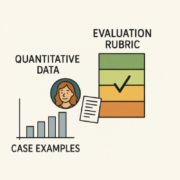
How evaluation rubrics can help trace progress and results in complex programs

When tackling the world’s most pressing challenges—like poverty, climate change, and systemic inequality—traditional monitoring and evaluation (M&E) tools often fall short. Why? Because they’re designed for linear projects with clear cause-and-effect logic, not for the messy, dynamic realities of systems change.
In their insightful article, How Evaluation Rubrics Can Help Trace Progress and Results in Complex Programs, Malene Soenderskov and Savi Mull make a powerful case for a different approach: evaluation rubrics.
Read: How evaluation rubrics can help trace progress and results in complex programs
Here’s a glimpse into what you’ll learn:
✅ Why linear M&E models don’t work for systemic change: Rigid indicators and predefined targets can’t capture shifts in power dynamics, cultural narratives, or policy landscapes.
✅ How rubrics enable nuanced, context-sensitive evaluation: By defining criteria, levels of progress, and descriptors, rubrics help organizations assess what good looks like in complex environments—and track progress along a continuum, not just a pass/fail.
✅ The power of participatory learning: Rubrics open space for multiple perspectives, foster dialogue, and support adaptive decision-making—turning compliance reporting into a meaningful learning process.
✅ Real-world examples: From Laudes Foundation to international NGOs, rubrics are helping organizations make sense of complex change and guide strategic adaptations.
Ready to rethink how you measure change in your programs?
👉 Download the full article here and discover practical tools, frameworks, and real-life insights that can help you capture the real value of your work.
Let’s move beyond numbers—and embrace a richer, more honest conversation about progress and impact.
Do you want to know more?
Join our upcoming webinar on evaluation rubrics – a practical, flexible method for assessing progress in complex development programs.
Learn how leading INGOs and foundations are using rubrics to:
✅ Go beyond linear cause-effect models
✅ Track changes in power, narratives, and relationships
✅ Support learning, participation, and adaptive decisions
🗓 June 3, 10:00 AM (UTC +2)
💻 Online | Hosted by StrategyHouse
🔗 Register now: https://www.globalevaluationinitiative.org/event/how-use-evaluation-rubrics-assess-progress-and-contribution-complex-programs-aimed-systems